
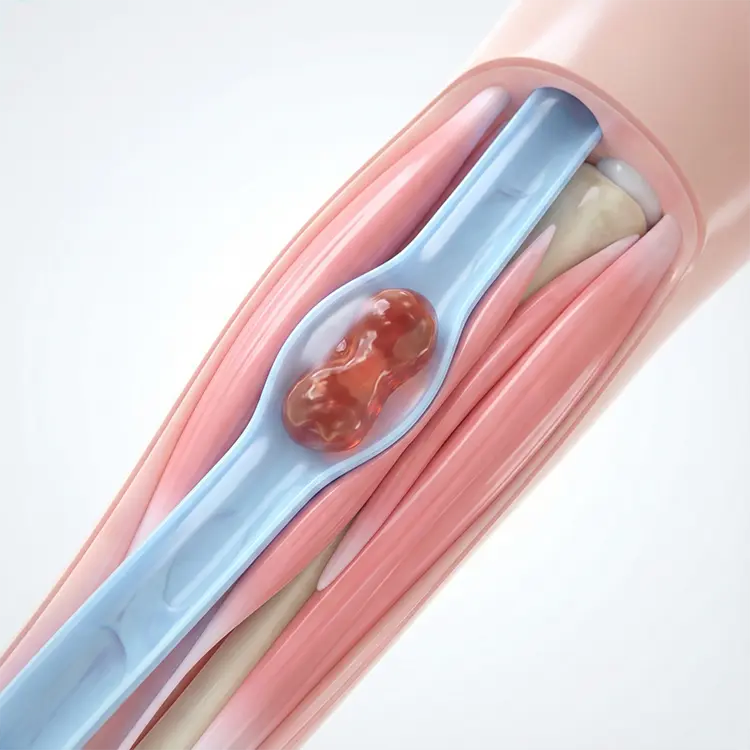
Deep Vein Thrombosis (DVT) is a serious medical condition involving a blood clot (thrombus) that forms in a deep vein, most often in the leg. This condition requires immediate medical attention because if a clot breaks loose, it can travel to the lungs, resulting in a pulmonary embolism. Early diagnosis and management are critical to preventing complications.
Procedures Performed
of Clinical Experience
Patients Treated
9001:2015 Certified
Do not ignore these signs, especially if they appear suddenly in one leg only:
At The Vein Center, Dr. Saurabh Joshi provides rapid diagnostics:
Once you are on blood thinners, walking is often encouraged to help blood flow. However, BEFORE diagnosis, do not massage the leg or exercise vigorously as it might dislodge the clot. See a doctor first.
No. While the body can dissolve small clots over months, a large DVT requires medication to prevent it from growing or moving to the lungs. Ignoring it is dangerous.
“Educational video series by Dr. Saurabh Joshi (MMC Reg. No: 2005/05/2629) for patient awareness. Content is for informational purposes and does not replace professional medical consultation, diagnosis, or treatment.”
Fill in your details for our Limited Slots Available.